Dog Grooming Scissors: Top Shears For Safe, Cleaner At-Home Trims
A quality dog grooming scissors setup helps you keep coats neat, reduce mat buildup, and avoid rushed emergency trims. If you are trimming at home, choosing the right dog grooming scissors by blade shape, length, and safety features makes sessions smoother for both you and your dog.
This guide compares top shears, explains how to match scissors to coat type, and shows how to build a practical home routine. We also connect this topic to related grooming tools like dog grooming brush, dog grooming vacuum, and dog grooming tub workflows.
Quick Answer
The best dog grooming scissors for most home users are a 7-inch straight shear, a rounded-tip safety scissor, and optional thinning shears for blending. Use short sessions, calm handling, and coat-specific technique for safer, cleaner trims.
Key Takeaways
- Start with straight and safety-tip shears before advanced styles.
- Match blade type to coat density and trim goal.
- Scissor control improves with shorter, frequent sessions.
- Brushing before trimming prevents snagging and uneven lines.
- Routine maintenance can reduce long-term dog grooming prices.
Table of Contents
Top Dog Grooming Scissors Picks
| Product | Key Feature | Best For | Price Range | Rating |
|---|---|---|---|---|
| Geib Buttercut 7.5 inch Straight Shears | Precise edge and smooth cutting action | General body trimming | $90-$140 | 4.8/5 |
| Kenchii Love Curved Shears | Curved profile for rounded finish lines | Legs and contour work | $70-$120 | 4.7/5 |
| Purple Dragon Professional Set | Value kit with straight, curved, thinning | New home groomers | $30-$55 | 4.6/5 |
| HASHIMOTO 6.5 inch Thinning Shears | Balanced tooth spacing for blending | Soft transitions and de-bulking | $35-$65 | 4.5/5 |
| Andis Pet Grooming Shears Kit | Beginner-friendly ergonomic handles | Routine at-home trims | $28-$50 | 4.4/5 |
| Pet Magasin Rounded Tip Safety Scissors | Rounded tips for sensitive zones | Face, paws, and hygiene trims | $12-$20 | 4.4/5 |
Detailed Reviews
1) Geib Buttercut Straight Shears
These shears are known for smooth blade action and dependable cut quality, which helps when you want cleaner lines with fewer repeated passes. They are a strong choice for users committed to regular coat maintenance.
Because they are premium-priced, they make most sense if you groom frequently.
2) Kenchii Love Curved Shears
Curved shears make shaping around legs and rounded body areas easier. They can produce a polished finish faster than straight blades alone when used carefully.
Beginners should practice on low-risk coat sections first to build confidence.
3) Purple Dragon Professional Set
This set is practical for starting out because it includes multiple shear types at a lower entry cost. For households still learning what works for their dog's coat, it offers useful flexibility.
Long-term heavy users may eventually upgrade to higher-end single shears.
4) HASHIMOTO Thinning Shears
Thinning shears are excellent for blending and softening harsh lines after straight cuts. They are especially helpful on fluffy coats where bulk control matters.
Use short, controlled passes to avoid uneven patching.
5) Andis Pet Grooming Kit
Andis kits tend to be straightforward and approachable for casual home use. Handle comfort and predictable performance make them suitable for routine trim touch-ups.
They are a solid middle-ground option for owners focused on practicality.
6) Pet Magasin Rounded Tip Scissors
Safety-tip scissors help reduce injury risk around face and paws. They are useful even for advanced users as part of a safer complete toolkit.
They are not ideal for full-body shaping but excellent for detail zones.
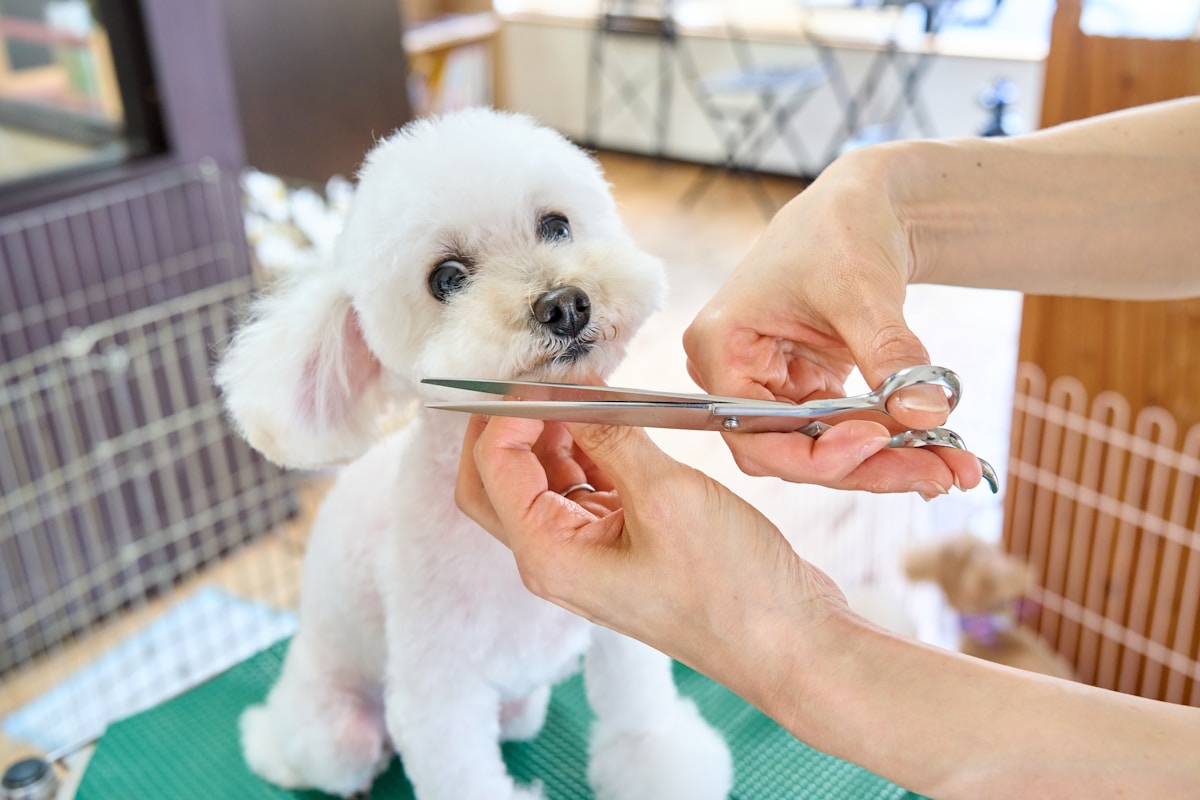
Types of Dog Grooming Scissors and When to Use Them
Straight Shears
Best for general body trimming and line creation. Most home users should start here.
Curved Shears
Useful for rounded areas like legs, chest, and tail transitions where straight lines look unnatural.
Thinning Shears
Designed for blending and reducing bulk without removing too much coat at once.
Safety-Tip Scissors
Best for sensitive zones near eyes, muzzle, and paw pads. Lower risk for unexpected movement.
Safe Trimming Technique for Better Results
- Prep coat first: use a dog grooming brush to remove tangles.
- Stabilize your setup: keep dog on secure non-slip surface.
- Trim in small sections: avoid long sweeping cuts.
- Check symmetry often: step back and compare both sides.
- End early if stress rises: multiple short sessions beat one long stressful trim.
For thicker coats and faster cleanup, pair shears with a dog grooming vacuum and finish in a dog grooming tub workflow when needed.
Coat-Type Trimming Playbook
The same dog grooming scissors set performs very differently depending on coat type. Matching technique to coat structure helps you avoid choppy lines and accidental over-thinning.
Double Coats (Huskies, Shepherd Mixes, Retrievers)
Use thinning shears conservatively to blend feathering without removing too much protective topcoat. Focus on tidy edges around legs, rear feathering, and tail ends rather than broad body trimming. Heavy body scissoring on double coats can create uneven regrowth patterns and increase maintenance burden. A brushing-first routine with a de-shedding tool usually gives better results than aggressive cutting.
Curly and Dense Coats (Poodle Mixes, Bichons)
Curly coats need careful sectioning because compressed curls can hide unevenness until they dry. Work in small zones, comb up the coat, then trim surface lines gradually with straight shears. Curved shears are useful around round leg columns and head transitions. Re-check symmetry from multiple angles before final blending, especially after the coat fluffs back up.
Silky and Drop Coats (Yorkies, Shih Tzu Types)
Silky coats highlight every cut line, so sharp edges and controlled hand position matter. Use long, deliberate micro-cuts instead of short repetitive snips that leave visible steps. Safety-tip scissors are best near face and sanitary zones where sudden movement is common. If your dog shifts often, split one long trim into two short sessions on separate days.
Short Coats and Touch-Up Areas
For short-coated dogs, most owners only need paw, sanitary, and stray hair cleanup. In these cases, a compact rounded-tip scissor is usually enough. Over-cutting short coats can create patchiness that looks worse than natural growth, so prioritize minimal corrective trimming and frequent brushing.
Scissor Care and Sharpening Schedule
Good technique is only half the equation. Dull or dirty shears pull hair, increase hand fatigue, and raise injury risk. Use this maintenance schedule to keep your setup reliable:
- After each session: wipe blades, remove trapped hair at pivot points, and dry fully before storage.
- Weekly: apply one drop of shear oil at the pivot and cycle blades open/closed several times.
- Monthly: inspect tension and screw tightness. Over-tight blades drag; loose blades fold hair.
- Every 3-6 months: sharpen depending on coat density and session frequency.
- As needed: retire damaged shears immediately if tips bend or blades chip.
Store shears in a dry case, never loose in a drawer with metal tools. If you groom multiple dogs, consider keeping one pair for rough work and one pair for finishing details. That simple separation extends edge life and improves consistency.
Dog Grooming Cost and Dog Grooming Prices Impact
Routine scissor maintenance between appointments can reduce severe matting and overgrowth, which may lower appointment complexity. Over time, that can influence both dog grooming cost and dog grooming prices if your groomer spends less time on correction work.
For pricing benchmarks, see dog grooming cost and dog grooming prices.
How We Chose
Our ranking framework prioritizes safe, realistic home use. We scored products on:
- Cut quality: smoothness and control on common coat textures.
- Safety: suitability for sensitive trim zones and handling stability.
- Ergonomics: comfort for longer sessions.
- Durability: edge retention and maintenance reliability.
- Value: practical performance per dollar.
We align grooming safety with resources from AKC grooming guidance, AVMA, and PetMD grooming resources.
Related Guides
Frequently Asked Questions
What size dog grooming scissors should beginners buy?
A 6.5 to 7.5 inch straight shear plus a safety-tip scissor is a practical starting combo for most home users.
Are thinning shears necessary?
They are useful for blending and coat bulk control, but not essential for basic trim maintenance.
Can I use regular haircut scissors on dogs?
Dog-specific shears are safer and more effective for pet coat texture and movement patterns.
How often should grooming scissors be sharpened?
Many home users service shears every 6 to 12 months, depending on usage frequency and coat density.
Will at-home trimming lower grooming costs?
Regular maintenance can reduce heavy correction work, which may lower overall professional grooming expenses.
Final Verdict
The right dog grooming scissors setup gives you safer control, cleaner lines, and less coat stress between pro appointments. Start with core shears, trim in short calm sessions, and build technique gradually. Consistent maintenance delivers better coat outcomes than occasional rushed trimming.