Best Toys for Dogs With Anxiety
The best toys for dogs with anxiety give nervous dogs a focused, repeatable activity that lowers stress instead of letting anxious energy build into destructive or compulsive behavior. Whether your dog paces during thunderstorms, shreds furniture when left alone, or pants and drools at the sound of fireworks, the right toy can interrupt the anxiety cycle and replace it with a calming routine.
Dog anxiety is more common than many owners realize. Veterinary behaviorists estimate that separation anxiety alone affects roughly 20 to 40 percent of dogs seen in behavior practices, and noise phobias are one of the most frequently reported behavioral concerns worldwide. Anxiety does not always look dramatic. Some dogs show subtle signs such as lip licking, yawning out of context, paw lifting, or refusing food. Others escalate quickly into barking, destructive chewing, house soiling, or escape attempts. Toys cannot replace professional behavior modification when anxiety is severe, but they are a practical and accessible layer in a broader management plan.
This guide reviews six targeted products that address different anxiety triggers through distinct mechanisms: food-driven self-soothing, cognitive redirection, sensory comfort, slow feeding, repetitive licking, and sustained pressure. We explain why each approach works, who it works best for, and how to introduce it so your dog actually benefits rather than ignoring the toy or becoming more frustrated.
Quick Answer
Anxious dogs respond best to enrichment toys that engage a single sense deeply rather than toys that overstimulate. A stuffable KONG or lick mat before a known stressor gives most dogs the strongest calming effect, while puzzle toys and snuggle toys add variety for dogs that need more layered support throughout the day.
Key Takeaways
- Different anxiety types respond to different toy mechanisms: food-stuffing for separation anxiety, lick mats for noise events, puzzles for generalized restlessness.
- Repetitive licking and chewing stimulate endorphin release, which produces a measurable calming effect in dogs.
- Introduce anxiety toys during calm moments first so your dog builds a positive association before facing a real stressor.
- Rotate two to three anxiety-specific toys across the week to maintain novelty without overwhelming a stressed dog.
- Toys work best as one layer in a management plan that may also include training, environmental changes, and veterinary guidance.
- Browse our full Dog Toys hub for additional enrichment and play categories beyond anxiety support.
Table of Contents
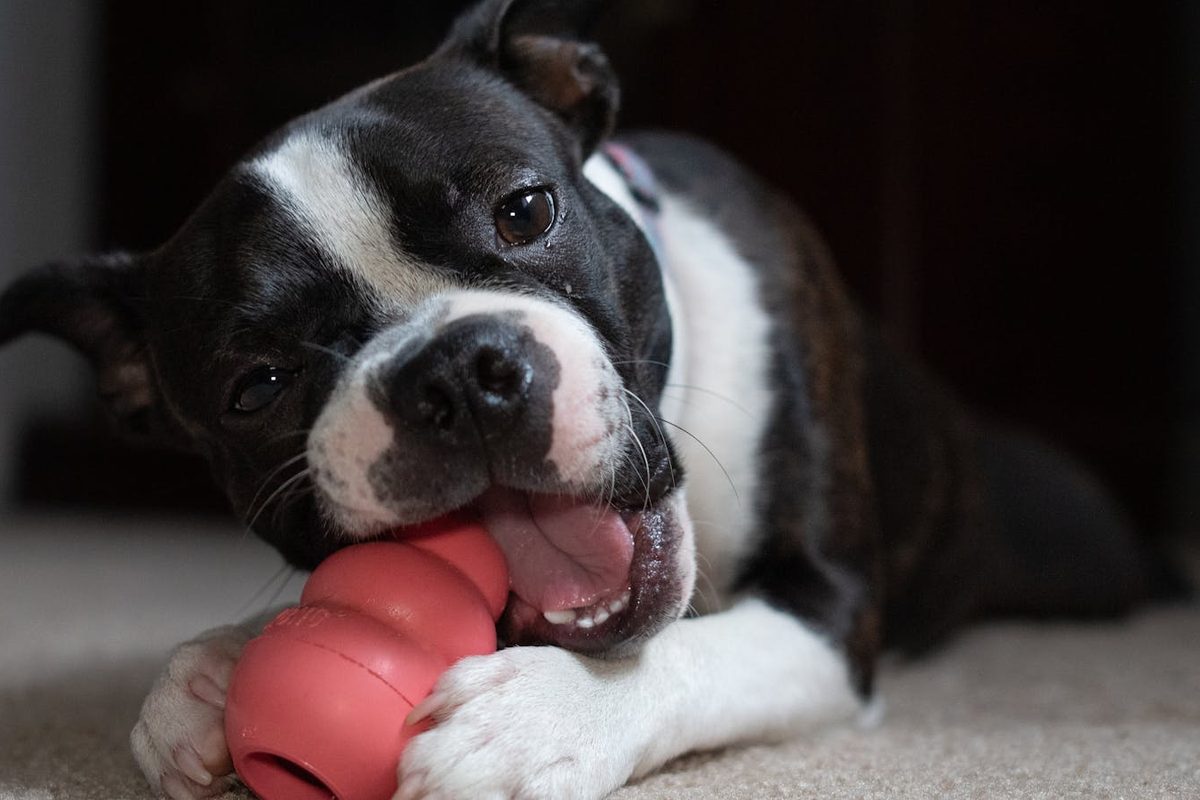
Top Calming Toy Picks at a Glance
These six picks cover the major calming mechanisms: self-soothing through food, cognitive redirection, sensory comfort, slow feeding, endorphin-triggering licking, and body-pressure regulation. Most anxious dogs benefit from at least two or three of these categories working together.
| Product | Key Feature | Best For | Price Range | Rating |
|---|---|---|---|---|
| KONG Classic | Stuffable natural rubber cavity for frozen enrichment | Separation anxiety and crate training | $10-$20 | 4.8/5 |
| Outward Hound Nina Ottosson Dog Brick | Intermediate sliding puzzle with hidden treat compartments | Generalized anxiety and mental redirection | $22-$34 | 4.5/5 |
| SmartPetLove Snuggle Puppy | Pulsing heartbeat module and removable heat source | Nighttime anxiety, new-home transitions, noise phobias | $30-$45 | 4.6/5 |
| West Paw Toppl | Wide-cavity slow feeder with interlocking size options | Mealtime anxiety and pre-departure routines | $14-$26 | 4.7/5 |
| Hyper Pet Lickimat | Textured surface for spreadable food and repetitive licking | Storm and firework anxiety, grooming stress | $8-$16 | 4.5/5 |
| Thundershirt Sport | Breathable compression wrap with sustained gentle pressure | Noise phobias, travel anxiety, vet visit stress | $40-$55 | 4.4/5 |
Detailed Product Reviews
1) KONG Classic
The KONG Classic is one of the most widely recommended tools for dogs with separation anxiety, and the reason is straightforward: it turns alone time into a food-driven activity that occupies the dog during the critical window right after the owner leaves. Most dogs with separation anxiety show peak distress in the first 15 to 20 minutes of being alone. A frozen, stuffed KONG can cover that entire window and sometimes extend well beyond it depending on what you pack inside.
The natural rubber body is durable enough for moderate to strong chewers and has an unpredictable bounce that adds a layer of engagement when the dog nudges or drops it. You can stuff it with peanut butter, banana, softened kibble, canned pumpkin, or a combination, then freeze it overnight so the contents take longer to extract. This slow extraction process gives the dog something to work on rather than something to simply consume, which is the key difference between a calming enrichment tool and a regular treat.
Durability is strong for most dogs. The Classic red version suits average chewers, while the black Extreme version handles power chewers. Both sizes are dishwasher safe for easy cleaning. The main limitation is that some dogs with very high anxiety may not engage with food at all when distressed, so the KONG works best when introduced during calm practice sessions first. On the positive side, it is inexpensive, widely available, and flexible enough to use daily without losing effectiveness when you vary the fillings. On the downside, heavily frozen KONGs can leave moisture on floors and fabric surfaces, and dogs that have not been taught how to work the toy may give up quickly.
2) Outward Hound Nina Ottosson Dog Brick Puzzle
Puzzle toys address anxiety from a different angle than food-stuffing toys. Instead of soothing through sustained chewing or licking, they redirect mental energy toward problem-solving. For dogs with generalized anxiety or restlessness that builds throughout the day, a puzzle session can function like a cognitive reset that lowers arousal and replaces pacing or whining with focused concentration.
The Nina Ottosson Dog Brick is an intermediate-level puzzle with sliding covers, flip lids, and removable bone pieces that hide treat compartments. It requires the dog to use its nose and paws in sequence rather than just smashing or flipping a single mechanism. This layered difficulty is important because dogs that solve a puzzle too quickly do not get the sustained engagement needed to interrupt an anxiety pattern. At the same time, the difficulty should not be so high that frustration adds to the stress.
The plastic construction is sturdy enough for supervised play but should not be left with unsupervised power chewers who might crack the housing. It cleans easily with warm water and mild soap. The main advantage is the cognitive load: most dogs need five to fifteen minutes to clear all compartments, which is enough time to meaningfully shift their mental state. The downside is that some dogs learn the solution pattern quickly, so you may need to rotate in other puzzle levels or brands after a few weeks to maintain the challenge. Puzzle toys also require owner setup and supervision, so they are not a set-and-forget solution the way a frozen KONG can be.
3) SmartPetLove Snuggle Puppy Behavioral Aid Toy
The Snuggle Puppy targets anxiety through sensory comfort rather than food or problem-solving. It contains a battery-powered heartbeat module that pulses at a steady rhythm and an optional disposable heat pack that adds warmth. The combination mimics the presence of a littermate or companion, which is why it was originally designed for puppies transitioning to a new home. However, it has proven effective for adult dogs dealing with nighttime anxiety, crate adjustment, noise phobias, and separation distress.
The mechanism behind it is rooted in how proximity and warmth affect canine stress hormones. Dogs are social sleepers, and the absence of a warm body nearby can trigger or amplify anxiety during quiet hours. The steady heartbeat rhythm provides a form of passive sensory input that does not require the dog to do anything active, which makes it a good option for dogs that are too shut down by anxiety to engage with food toys or puzzles.
The plush body is soft and machine-washable with the heartbeat module removed. The heartbeat unit runs on a single AAA battery and has a continuous-run mode or an auto-shutoff timer. Build quality is adequate for cuddling and carrying but not designed for aggressive chewing, so dogs that destroy plush toys during anxiety episodes may damage it quickly. That is the main limitation. On the positive side, it is one of the few anxiety tools that works passively, meaning the dog does not need to be food-motivated or cognitively engaged for it to have an effect. It is particularly strong for dogs that pace at night, whine in the crate, or become restless during storms when food-based options are refused.
4) West Paw Toppl
The West Paw Toppl is a slow-feeding enrichment toy that sits in the overlap between food puzzle and stuffable chew toy. Its wide, open cavity makes it easier for dogs to access food than a KONG, which is actually an advantage for anxious dogs that need a quick initial reward to engage. Once the easy outer layer is gone, the textured interior ridges hold softer foods in place and extend the session.
The design allows you to nest a small Toppl inside a large one to create a two-stage feeding challenge, which can double the engagement time. This modularity is useful for owners who want to scale difficulty without buying entirely different products. You can fill it with yogurt, wet food, mashed sweet potato, or a mix of dry and soft ingredients, then freeze it for longer-lasting sessions.
West Paw manufactures the Toppl from their proprietary Zogoflex material, which is BPA-free, dishwasher safe, and backed by a one-time replacement guarantee if your dog damages it. This makes it one of the more durable options in the enrichment category. It is also recyclable through West Paw's program. The main advantage over a standard KONG is accessibility. Dogs that are new to enrichment toys or that shut down when challenged can start with an easy Toppl fill and build confidence before facing harder extraction challenges. The downside is that the wide opening means very food-driven dogs may finish it faster than a tightly packed KONG, so it may not cover as long a window for separation anxiety management without freezing.
5) Hyper Pet Lickimat
Lick mats work through one of the most direct calming pathways available: repetitive licking triggers endorphin release, which lowers heart rate and reduces cortisol-driven stress behavior. This is not a marketing claim. Veterinary behaviorists have noted the calming effects of sustained licking in clinical settings, and lick mats are increasingly recommended as a low-cost, low-effort anxiety management tool for situations like thunderstorms, fireworks, grooming sessions, and veterinary visits.
The Hyper Pet Lickimat has a textured rubber surface with raised patterns that hold spreadable food in small pockets, forcing the dog to lick slowly and methodically rather than gulping. You can spread peanut butter, plain yogurt, canned pumpkin, wet dog food, or mashed banana across the surface. Freezing the mat after spreading extends the session from a few minutes to fifteen or twenty minutes depending on the food type and your dog's licking speed.
The mat attaches to smooth surfaces with a suction backing, which keeps it in place during use and prevents the dog from carrying it away or flipping it. It is dishwasher safe and comes in several pattern variations that affect difficulty. The main advantage is how quickly it works. Most dogs begin licking within seconds of being presented with a loaded mat, which means you can deploy it reactively when a stressor appears rather than needing advance preparation. The downside is that lick mats are single-task items. Once the food is gone, the calming effect ends, so they work best for time-limited stressors rather than extended alone time. They also require cleanup after each use, and some dogs with very strong tongues can wear down the texture over months of heavy use.
6) Thundershirt Sport
The Thundershirt is not a toy in the traditional sense, but it addresses anxiety through a mechanism that no toy can replicate: sustained gentle pressure across the dog's torso. The concept is similar to swaddling an infant or using a weighted blanket for humans. The constant, evenly distributed pressure activates the parasympathetic nervous system and can reduce heart rate, panting, trembling, and vocalizing in many anxious dogs.
The Sport version uses a breathable, moisture-wicking fabric that makes it more practical for active dogs, warm climates, and longer wear sessions compared to the original Thundershirt design. It fastens with adjustable Velcro panels that allow you to fine-tune the compression level. Proper fit is critical because too-tight application can increase stress rather than reduce it, while too-loose fit provides no therapeutic pressure.
Clinical studies and owner surveys suggest that the Thundershirt produces noticeable anxiety reduction in roughly 80 percent of dogs, though the degree of effect varies. It tends to work best for noise phobias, travel anxiety, and vet visit stress. It can also be combined with other tools on this list. For example, pairing a Thundershirt with a frozen lick mat during a thunderstorm addresses both the body-pressure and endorphin-release pathways simultaneously, which often produces a stronger result than either tool alone. The main limitation is that some dogs do not respond to pressure-based calming at all, and a small percentage find the garment itself stressful. Thundershirt offers a satisfaction guarantee for this reason. The Sport model is machine washable and holds up well through repeated use, though the Velcro can collect fur and lose grip over time if not cleaned regularly.
Understanding Dog Anxiety and How Toys Help
Dog anxiety falls into several broad categories, and understanding which type your dog experiences determines which tools will be most effective.
Separation anxiety is triggered by the absence of the owner or a bonded companion. Signs include destructive behavior focused on exit points such as doors and windows, vocalization that starts within minutes of departure, house soiling despite being housetrained, and excessive drooling or panting. Dogs with separation anxiety need engagement tools that create a positive association with alone time. Stuffable toys and slow feeders are the primary options here because they give the dog something rewarding to focus on during the departure window.
Noise anxiety is a fear response to specific sounds such as thunderstorms, fireworks, construction, or household appliances. It often involves trembling, hiding, panting, pacing, and attempts to escape or burrow. Noise anxiety benefits from tools that provide either sensory counter-input, like lick mats and pressure wraps, or passive comfort, like heartbeat toys. Food-based tools can work during mild noise events but are often refused when the dog is in a full panic state.
Generalized anxiety is a baseline state of heightened arousal that does not always have a clear trigger. These dogs may seem restless, hyper-vigilant, slow to settle, or easily startled throughout the day. Puzzle toys and enrichment feeders can help by providing structured cognitive outlets that lower overall arousal. Regular enrichment routines, where the dog receives a puzzle or stuffed toy at predictable times each day, can reduce baseline anxiety over weeks by creating a sense of environmental predictability.
Across all anxiety types, toys work through three primary pathways. First, oral engagement through chewing and licking releases endorphins that produce a natural calming effect. Second, cognitive load from puzzles and extraction challenges redirects mental energy away from anxiety triggers. Third, sensory comfort from warmth, heartbeat simulation, or sustained pressure activates the parasympathetic nervous system. The most effective approach for moderate to severe anxiety usually involves combining two or more of these pathways rather than relying on a single product.
Matching Toy Types to Anxiety Triggers
Not every anxiety toy works for every situation. Here is a practical framework for matching the right tool to the right trigger.
For pre-departure routines and separation anxiety: start with a frozen stuffed KONG or Toppl given five to ten minutes before you leave. This bridges the transition from owner-present to owner-absent and gives the dog a high-value activity during the peak distress window. If your dog does not engage with food when already anxious, practice with the toy during calm departures first, such as stepping outside for two minutes while the dog works on the KONG, and gradually extend the duration.
For noise events like storms and fireworks: deploy a lick mat or Thundershirt at the first sign of the trigger, before the dog reaches full panic. If the dog will still eat, a loaded Lickimat provides immediate licking engagement. If the dog refuses food, the Thundershirt or Snuggle Puppy can provide passive comfort without requiring the dog to do anything. Combining a pressure wrap with a heartbeat toy in a safe den-like space, such as a covered crate or closet, can be particularly effective during prolonged noise events.
For daily generalized anxiety and restlessness: build a predictable enrichment schedule using puzzle toys and varied stuffed feeders. A morning puzzle session and an afternoon frozen Toppl can create anchor points in the day that reduce overall arousal. Consistency matters more than variety here. The predictability of the routine itself has a calming effect independent of the specific toy used.
For crate anxiety and nighttime settling: the Snuggle Puppy is the strongest option because it works passively while the dog rests. Place it in the crate with the heartbeat module activated and, if appropriate, a heat pack for the first few nights. Pair this with a small frozen KONG for the initial settling period so the dog has both an active and a passive calming input.
How to Introduce Anxiety Toys the Right Way
The most common mistake owners make with anxiety toys is introducing them for the first time during a stressful event. A dog in a panic state is unlikely to investigate a new object, engage with an unfamiliar puzzle, or accept food from an untested device. The toy then gets labeled as ineffective when the real problem was timing.
Follow this sequence for any new anxiety tool:
- Step one: present the toy during a completely calm period with no stressors present. Let the dog investigate, sniff, and interact at its own pace. For food toys, make the first filling extremely easy to access so the dog gets a quick reward.
- Step two: repeat calm-state sessions for three to five days so the dog builds a reliable positive association with the object.
- Step three: introduce the toy during a mild version of the relevant stressor. For separation anxiety, this might mean stepping out of sight for one minute. For noise anxiety, this might mean playing recorded storm sounds at low volume.
- Step four: gradually increase stressor intensity while continuing to provide the toy. Track whether the dog engages with the toy more, less, or the same as intensity rises. If engagement drops sharply, reduce the stressor level and build more slowly.
This graduated approach is the same framework used in professional desensitization protocols, scaled down to a practical home application. It does not replace veterinary behavior consultation for severe anxiety, but it makes the difference between a toy that collects dust and one that actually helps your dog cope.
Supervision is important during early sessions with any toy. Monitor for signs of frustration such as barking at the toy, pawing aggressively, or walking away repeatedly. If frustration appears, simplify the challenge. For puzzle toys, leave some compartments open. For stuffed toys, use softer fillings that extract more easily. Success should feel achievable so the dog stays engaged rather than giving up.
How We Chose
Our evaluation process for anxiety-specific toys focuses on different criteria than general toy reviews because the goal is calming rather than entertainment or durability alone.
- Calming mechanism: does the product engage a recognized anxiety-reduction pathway such as endorphin release through licking, cognitive redirection, sensory comfort, or parasympathetic activation through pressure?
- Accessibility for stressed dogs: can an anxious dog engage with this product even when arousal is moderately elevated, or does it require a calm baseline state to be useful?
- Duration of engagement: how long does the calming activity last relative to common anxiety event durations?
- Build quality and safety: is the product durable enough for unsupervised use when applicable, and are materials non-toxic and easy to clean?
- Owner practicality: how much preparation, cleanup, and ongoing cost does the product require for regular use?
We cross-reference product claims with behavioral research, including resources from the American College of Veterinary Behaviorists, enrichment guidance from PetMD, and safety standards referenced by the AVMA. Products that rely on unsubstantiated calming claims without a clear behavioral mechanism were excluded from this list.
Related Guides
Frequently Asked Questions
What type of toy is best for a dog with separation anxiety?
Stuffable toys like the KONG Classic and slow-feeding enrichment toys work well for separation anxiety because they create a positive association with alone time and keep the dog focused during the critical first 15 to 20 minutes after the owner leaves. Introduce the toy during calm practice departures first so the dog learns to engage with it before facing real separation.
Do lick mats actually calm anxious dogs?
Yes. Repetitive licking stimulates endorphin release, which has a measurable calming effect. Lick mats spread with soft food give dogs a sustained licking activity that can reduce panting, pacing, and whining during stressful events. They are most effective for time-limited stressors like storms or grooming rather than extended alone time.
Can puzzle toys reduce anxiety-related destructive behavior?
Puzzle toys redirect mental energy toward problem-solving instead of destructive outlets like chewing furniture or scratching doors. They are most effective when introduced gradually and paired with positive reinforcement so the dog views the puzzle as rewarding rather than frustrating.
Are heartbeat toys only for puppies?
No. While heartbeat toys like the SmartPetLove Snuggle Puppy are popular for new puppies, adult dogs with anxiety also benefit from the rhythmic vibration and warmth, especially during thunderstorms, fireworks, or crate adjustment periods. The passive sensory input works regardless of age.
How many anxiety toys should I give my dog at once?
Start with one or two toys per anxiety event so your dog can focus. Rotate options across the week to maintain novelty. Offering too many toys at once can overwhelm an already stressed dog rather than calm it. Track which toys your dog engages with most and prioritize those during high-stress situations.
Final Verdict
The best toys for dogs with anxiety are not just distractions. They are structured calming tools that engage specific neurological pathways to lower stress, reduce destructive behavior, and help your dog cope with triggers that would otherwise escalate into panic or compulsive patterns. A frozen KONG for separation transitions, a lick mat for noise events, a puzzle for daily mental regulation, and a Snuggle Puppy or Thundershirt for passive comfort cover the full range of common anxiety presentations in most dogs.
The key to success is matching the right tool to the right trigger, introducing it properly during calm periods, and using it consistently as part of a broader routine rather than a one-time fix. Dogs with mild to moderate anxiety often show noticeable improvement within one to two weeks of regular enrichment-based management. Dogs with severe anxiety should also receive professional behavioral support, but even in those cases, the right calming toys make the overall treatment plan more effective and give the dog daily coping resources that build resilience over time.