How To Train A Deaf Dog
How to Train a Deaf Dog starts with one core principle: replace sound-based communication with clear, repeatable visual language. Deaf dogs can learn impressive obedience and household manners when cues are consistent and reward timing is clean. The process is different from sound-cue training, but it is not weaker or less reliable.
This guide walks through setup, hand signals, safety routines, and realistic training progression from home basics to public reliability. We also connect this approach with related training topics like How to Clicker Train a Dog and How to Train a Dog Not to Jump, adapted for visual communication.
Quick Answer
To train a deaf dog effectively, establish a visual marker system, teach one hand signal per behavior, reward immediately, and practice in short sessions with gradual distraction increases. Build attention first, then layer sit, stay, recall, and calm greeting skills.
Key Takeaways
- Deaf dogs can learn reliable obedience with visual structure.
- Attention check-ins are the foundation of every other cue.
- Consistent hand signals outperform frequent cue changes.
- Safety management is critical for off-leash and door routines.
- Short sessions with high-value rewards build faster confidence.
Table of Contents

Training Setup and Safety Foundation
Before cue training, set up a predictable environment. Deaf dogs rely heavily on visual patterns and routine timing, so stability directly affects learning speed. Start in low-distraction areas with clear sight lines and minimal foot traffic. Use a comfortable long line outdoors until recall reliability is proven.
Prioritize safety around doors, gates, and driveways. A deaf dog cannot hear warning cues, so physical management must be stronger than average. Door barriers, leash transitions, and controlled threshold behavior prevent dangerous mistakes while training progresses.
Choose one reward system and keep it consistent for the first phase. If you rotate reward type constantly, marker clarity drops and response speed slows. Food rewards are usually easiest in early stages, then toy rewards such as tug games can be layered in later.
Build Your Hand-Signal Language
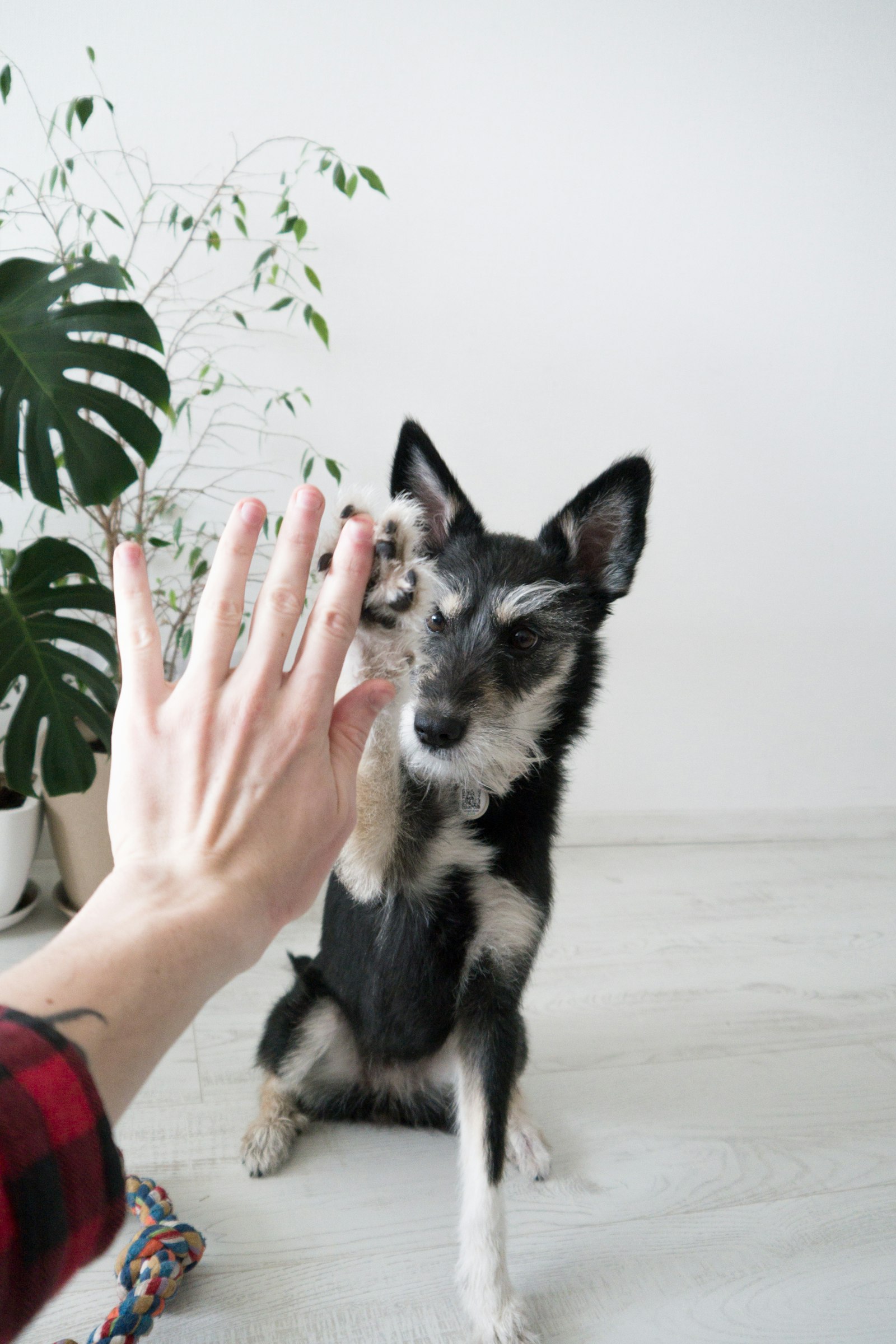
Hand signals should be simple, distinct, and easy to repeat under stress. Avoid using similar gestures for different behaviors. For example, use one open palm for sit, one downward sweep for down, and one chest tap for check-in. Keep your whole household aligned so the dog sees one communication system.
Create a small reference card for family members and visitors who interact regularly with your dog. This prevents mixed signaling and protects training momentum.
Step 1: Teach Attention/Check-In
Attention is the gateway behavior. Without consistent check-ins, all other cues become fragile in real life. Start indoors: wait for eye contact, mark with your visual marker (thumbs-up or quick flash), then reward immediately. Repeat in short sets until your dog starts offering check-ins frequently.
Once check-ins are strong, add mild movement and distance. Turn away, move around the room, then reward orientation back to you. This creates a habit of visual monitoring that later improves recall and leash behavior dramatically.
Many owners progress too fast here. Stay in this stage longer than you think. A strong check-in reflex prevents frustration in every later training goal.
Step 2: Train Core Daily Cues
After check-in consistency, train daily control cues in this order:
- Sit: easiest for shaping calm response and greeting control.
- Down: supports settling and duration behaviors.
- Stay/Wait: useful for door and food routines.
- Place/Mat: helps with guests and household movement.
For each cue, use one visual signal, one marker, immediate reward, and short repetitions. Keep sessions 3 to 8 minutes. End before fatigue appears. Longer sessions usually reduce precision and can create sloppy response habits.
As behaviors stabilize, begin mild real-life practice: mealtime setup, hallway transitions, and calm greetings. This step builds practical reliability faster than endless living-room drills.
Step 3: Reliable Recall for Deaf Dogs
Recall is a safety-critical skill for deaf dogs, so train it methodically. Begin indoors with short distance and high-value rewards. Use a consistent recall signal (such as sweeping arm gesture) and reward heavily when your dog closes distance promptly.
Move to fenced outdoor spaces with a long line. Increase distraction slowly and avoid testing off-leash reliability too early. Every failed recall weakens cue confidence, so setup matters more than speed. If response drops, reduce distance and distraction immediately.
Pair recall training with movement rewards, not just food. Brief play bursts can make response faster for high-drive dogs.
Household Rules and Startle Prevention
Deaf dogs can startle when touched unexpectedly during sleep. Teach a predictable wake-up routine early. Use gentle floor vibration, then touch in one consistent body area, and reward calm orientation. Repeat until waking cues become neutral and safe.
Establish visual transition cues for routine activities: leash on/off, crate entry, meal prep, and guest arrival. Predictable patterns reduce stress and improve behavior stability throughout the day.
If your dog becomes anxious with guests, combine visual sit/wait work with routines from How to Train a Dog Not to Jump on People.
Common Mistakes and Fixes
- Changing hand signals too often: pick one signal and keep it fixed.
- Skipping attention foundation: train check-ins first before advanced cues.
- Overlong sessions: use short focused sets with clear win points.
- Weak safety management: use barriers and long lines until reliability is proven.
- Inconsistent family cues: use shared signal chart and practice standards.
When progress stalls, simplify context instead of adding pressure. Lower distraction, shorten distance, and increase reward quality. Most plateaus resolve when clarity improves.
30-Day Deaf Dog Training Schedule Example
Week 1 should focus almost entirely on check-ins, calm wake-up routines, and one to two basic cues such as sit and hand-target. Week 2 adds short stay/wait reps and doorway control with consistent visual markers. Week 3 introduces long-line recall in low-distraction outdoor settings and mat/place work for guest management. Week 4 combines all cues into short real-life sequences: leash on, check-in, sit at threshold, release, and recall back to handler. This progression keeps cognitive load manageable while building practical confidence for both dog and handler.
Use simple logs after each session: cue practiced, success rate, distraction level, and reward type. These notes show where reliability breaks and make your next session easier to plan.
If your dog becomes stressed, pause progression and return to easier setups. Confidence-based training is faster in the long run than pushing through confusion.
Small wins repeated daily create durable behavior.
How We Chose
Our approach prioritizes low-stress, reinforcement-based methods that are measurable in home settings. We focus on:
- Signal clarity: one cue, one behavior, one marker rule.
- Safety-first sequencing: management before advanced freedom.
- Household practicality: routines families can maintain daily.
- Behavior reliability: performance in real contexts, not only quiet rooms.
This framework aligns with guidance from the AKC, behavior standards from the AVMA, and practical training references from PetMD.
Related Guides
Frequently Asked Questions
Can deaf dogs still be trained off-leash?
Some can, but only after strong recall reliability in fenced settings and careful safety progression. Many owners still use management tools in open areas.
What is the best first cue for deaf dog training?
Attention/check-in cues first. They create the communication bridge that every other cue depends on.
How long should each session be?
Usually 3 to 8 minutes works best. Short sessions preserve precision and reduce frustration for both dog and handler.
Do I need vibration collars to train a deaf dog?
Not always. Many dogs progress very well using only visual cues, long lines, and structured reinforcement.
What if my deaf dog startles when touched?
Use a predictable wake-up routine with gentle vibration and reward calm orientation. Repetition builds confidence and reduces surprise reactions.
Final Verdict
How to Train a Deaf Dog successfully comes down to clear visual communication, strong safety routines, and consistent daily repetition. With the right structure, deaf dogs can learn highly reliable behavior and thrive in active family life.