Pet Scan Cost With Insurance: What To Expect and How To Save
Understanding the pet scan cost with insurance is essential for any pet owner facing a potential cancer diagnosis or complex health issue that requires advanced diagnostic imaging. PET scans, short for Positron Emission Tomography scans, are among the most expensive veterinary diagnostics available, and knowing what your insurance will and will not cover can mean the difference between a manageable bill and a financial crisis.
This guide breaks down the real pet scan cost with insurance, explains how different policy types handle advanced imaging claims, compares PET scans to alternative diagnostics, and walks you through the claim filing process so you can make informed decisions without surprises at the checkout counter.
Quick Answer
A PET scan for a pet typically costs $1,500 to $3,000 or more without insurance. With a comprehensive accident and illness policy, most owners pay only 10 to 30 percent of the total after their deductible is met, bringing out-of-pocket costs down to roughly $150 to $900 depending on the plan. The key is having coverage in place before a diagnosis, since pre-existing conditions are excluded by virtually every insurer.
Key Takeaways
- PET scans for pets range from $1,500 to $3,000+ without insurance, making them one of the most expensive single diagnostic procedures in veterinary medicine.
- Comprehensive accident and illness policies typically cover PET scans at 70 to 90 percent reimbursement after your deductible is met.
- Waiting periods of 14 to 30 days for illness coverage mean you need insurance in place well before symptoms appear.
- Pre-authorization may be required by some insurers for advanced imaging, so always check your policy before scheduling.
- Alternatives like CT scans, MRI, and ultrasound may be recommended depending on what your vet is looking for, often at lower cost.
- Use the Pet Insurance hub to compare plans and find coverage that includes advanced diagnostic imaging.
Table of Contents
- What Is a PET Scan and When Do Pets Need One
- How Much Does a PET Scan Cost for Pets
- How Pet Insurance Covers Diagnostic Imaging
- PET Scan Cost With Insurance vs Without Insurance
- Which Insurance Plans Cover Advanced Imaging
- How to File a Claim for a PET Scan
- Alternatives to PET Scans for Pets
- How to Reduce PET Scan Costs
- Diagnostic Imaging Cost Comparison
- FAQ
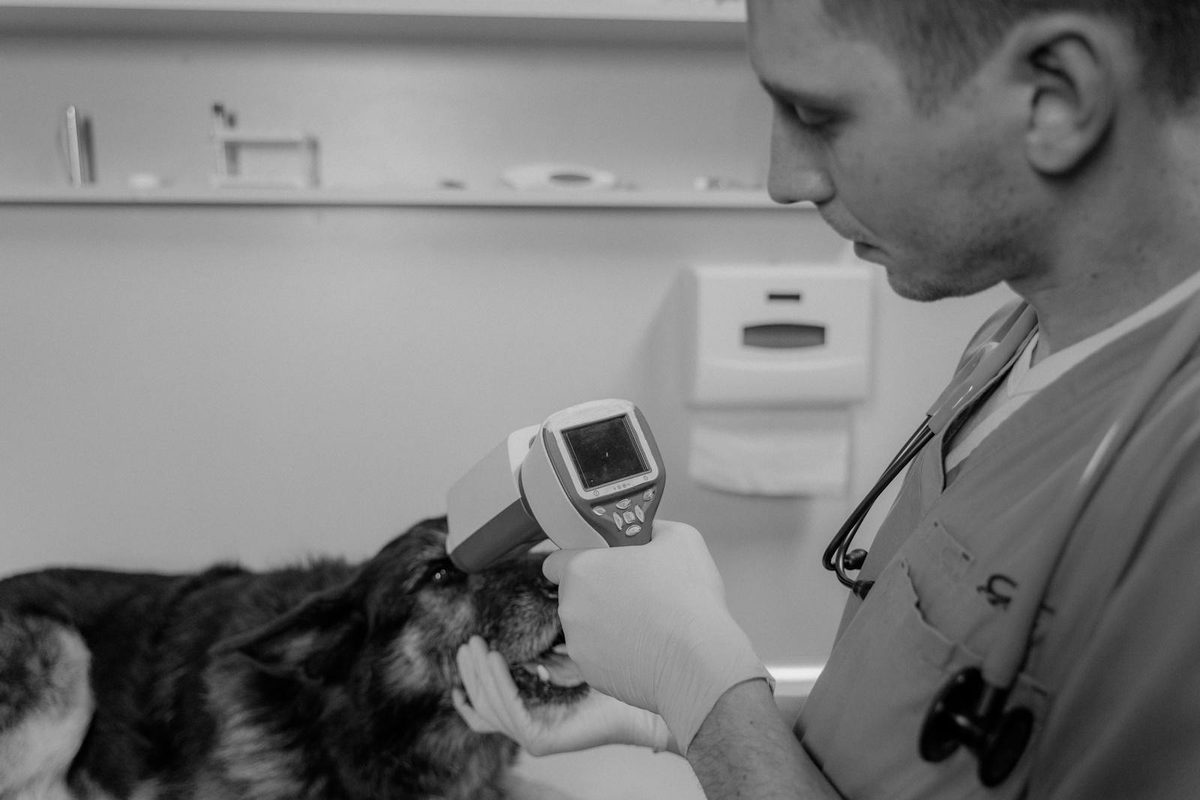
What Is a PET Scan and When Do Pets Need One
A PET scan, or Positron Emission Tomography scan, is an advanced diagnostic imaging procedure that detects metabolic activity at the cellular level. Unlike X-rays or standard CT scans that primarily show structural anatomy, a PET scan reveals how tissues are functioning. This makes it exceptionally valuable for detecting cancer, staging tumors, evaluating treatment response, and identifying areas of abnormal metabolic activity that other imaging modalities might miss.
During the procedure, a small amount of radioactive tracer, usually a glucose-based compound called fluorodeoxyglucose (FDG), is injected into the pet's bloodstream. Cancer cells and other highly active tissues absorb more glucose than normal cells, so they light up on the scan. The resulting images give veterinary oncologists a detailed map of where disease is active in the body.
Veterinarians most commonly recommend PET scans for pets in the following situations:
- Cancer detection and staging: Determining the location, size, and spread of tumors before creating a treatment plan.
- Treatment monitoring: Evaluating whether chemotherapy, radiation, or surgery has successfully reduced tumor activity.
- Recurrence screening: Checking whether cancer has returned after an initial round of treatment.
- Unexplained symptoms: Investigating persistent weight loss, organ dysfunction, or other signs that standard tests have not explained.
PET scans are not routine procedures. They are typically reserved for cases where other diagnostics have already been performed and the veterinary team needs more precise information to guide treatment decisions. Because PET scans require specialized equipment and trained staff, they are only available at veterinary specialty hospitals and university teaching hospitals, which contributes to their high cost.
The procedure itself usually requires general anesthesia or heavy sedation because the pet must remain completely still during the scan, which can last 30 to 60 minutes. This means anesthesia fees are added to the imaging cost, and pre-anesthetic bloodwork may be required as well.
How Much Does a PET Scan Cost for Pets
The cost of a PET scan for a dog or cat generally falls between $1,500 and $3,000, though some facilities charge more depending on the region, the size of the pet, and the complexity of the case. Several factors influence the final price:
- Geographic location: Veterinary specialty centers in major metropolitan areas tend to charge more than those in smaller cities. A PET scan in New York City or Los Angeles may cost $2,500 to $3,500, while the same scan in a midsize city might be $1,500 to $2,200.
- Pet size: Larger dogs may require more radioactive tracer and longer scan times, which can increase costs by $200 to $500 compared to small dogs or cats.
- Anesthesia requirements: General anesthesia adds $300 to $600 to the total, depending on the duration and monitoring required. Pre-anesthetic bloodwork adds another $100 to $250.
- Consultation fees: A board-certified veterinary oncologist or radiologist will interpret the results, and their consultation fee is typically $150 to $350.
- Combined imaging: Some facilities perform PET/CT combination scans that overlay metabolic and structural data for more precise results. These combined scans cost more, often reaching $2,500 to $4,000.
When you add up the imaging fee, anesthesia, pre-scan bloodwork, radiologist interpretation, and facility charges, a single PET scan visit can easily total $2,000 to $3,500 or more. For a pet undergoing cancer treatment that requires multiple scans over several months, the cumulative cost can reach $5,000 to $10,000 in imaging alone.
These numbers make it clear why understanding your insurance coverage before you need a PET scan is so important. Paying $3,000 out of pocket for a single diagnostic test is a significant burden for most families, but with the right insurance policy, that cost can be reduced dramatically.
How Pet Insurance Covers Diagnostic Imaging
Most comprehensive accident and illness pet insurance policies include coverage for diagnostic imaging as part of their standard benefits. This means that PET scans, CT scans, MRI scans, X-rays, and ultrasounds are all potentially covered as long as the underlying condition is not pre-existing and the policy is active with the waiting period already satisfied.
Here is how the coverage typically works:
Reimbursement model: Pet insurance in the United States and Canada operates on a reimbursement basis. You pay the veterinary bill upfront, submit a claim with documentation, and the insurer reimburses you a percentage of the covered costs. Most plans offer reimbursement levels of 70 percent, 80 percent, or 90 percent, which you choose when enrolling.
Deductible structure: Before reimbursement kicks in, you must meet your annual deductible, which typically ranges from $100 to $500. Once the deductible is met for the policy year, subsequent claims are reimbursed at your chosen percentage for the rest of that year.
Annual or per-incident limits: Some policies cap the total amount they will pay in a year or per condition. A plan with a $10,000 annual limit would cover most PET scan costs easily, while a plan with a $5,000 per-incident limit may cover the scan but leave less room for treatment costs. Unlimited annual maximum plans are available from several major insurers and are worth considering if you want maximum protection.
Pre-existing condition exclusions: This is the most critical factor for PET scan coverage. If your pet is diagnosed with cancer or another condition before you purchase insurance, or during the waiting period, the insurer will classify it as pre-existing and deny claims related to that condition. This is why enrolling your pet in insurance while they are young and healthy is the single most effective way to ensure you have coverage when you need it.
Waiting periods: Most illness-related waiting periods are 14 days from the policy start date, though some insurers require up to 30 days. Accident coverage waiting periods are shorter, usually 2 to 5 days. Since PET scans are almost always related to illness rather than accidents, the 14-to-30-day illness waiting period is the relevant one.
It is worth noting that wellness plans and accident-only plans generally do not cover PET scans. You need a comprehensive accident and illness policy to have diagnostic imaging included in your benefits.
PET Scan Cost With Insurance vs Without Insurance
The difference in out-of-pocket cost between having insurance and not having it is substantial. Here are three real-world claim calculation examples that show how the math works:
Example 1: 80 percent reimbursement with $250 deductible (already met)
- PET scan total bill: $2,200
- Annual deductible: $250 (already met from earlier claims)
- Reimbursement: 80 percent of $2,200 = $1,760
- Your out-of-pocket cost: $440
- Savings compared to no insurance: $1,760
Example 2: 90 percent reimbursement with $200 deductible (not yet met)
- PET scan total bill: $2,800
- Annual deductible: $200 (applied to this claim)
- Reimbursement: 90 percent of ($2,800 minus $200) = 90 percent of $2,600 = $2,340
- Your out-of-pocket cost: $460
- Savings compared to no insurance: $2,340
Example 3: 70 percent reimbursement with $500 deductible (not yet met)
- PET scan total bill: $1,800
- Annual deductible: $500 (applied to this claim)
- Reimbursement: 70 percent of ($1,800 minus $500) = 70 percent of $1,300 = $910
- Your out-of-pocket cost: $890
- Savings compared to no insurance: $910
Even in the least generous scenario, insurance cuts the bill nearly in half. With a high reimbursement plan and a deductible that has already been met from prior visits in the policy year, your out-of-pocket for a $2,200 PET scan drops to just $440. Over the course of a full cancer treatment plan that may include multiple scans, the savings compound significantly.
Without insurance, every dollar of the $1,500 to $3,000+ bill comes directly out of your pocket. Many pet owners without insurance are forced to make treatment decisions based on cost rather than what is medically optimal, which is a situation that proper planning can help avoid.
Which Insurance Plans Cover Advanced Imaging
Not all pet insurance plans are equal when it comes to covering PET scans and other advanced diagnostics. Here is what to look for when shopping for coverage:
Comprehensive accident and illness plans: These are the standard policies that cover diagnostic imaging including PET scans. Major providers such as Healthy Paws, Embrace, Nationwide, Trupanion, Pets Best, Figo, and ASPCA Pet Health Insurance all offer comprehensive plans that include advanced imaging as a covered benefit. However, the specific terms, reimbursement rates, deductibles, and annual limits vary considerably between providers.
Accident-only plans: These lower-cost policies cover injuries from accidents like broken bones or ingestion of foreign objects. They typically do not cover illness-related diagnostics, which means PET scans ordered for cancer investigation would not be covered. Accident-only plans may cover imaging if the scan is directly related to an accidental injury, but this is uncommon for PET scans specifically.
Wellness plans: Wellness add-ons cover routine preventive care like vaccinations, flea prevention, and annual exams. They do not cover diagnostic imaging of any kind. Wellness plans are supplementary to a main policy, not a substitute for comprehensive coverage.
When evaluating plans for advanced imaging coverage, check the following details in the policy documents:
- Annual maximum payout: Plans with unlimited annual limits offer the most protection. If you choose a plan with a cap, make sure it is high enough to cover imaging plus treatment costs, ideally $10,000 or more per year.
- Per-incident limits: Some plans cap how much they pay per condition rather than per year. Make sure the per-incident limit is sufficient for a full course of cancer diagnostics and treatment.
- Diagnostic imaging mentioned specifically: Review the covered services list to confirm that advanced imaging like PET scans, CT scans, and MRI are explicitly included rather than ambiguously referenced.
- Specialist visit coverage: Since PET scans happen at specialty hospitals, confirm that your plan covers specialist referrals and does not limit you to general practice veterinary care.
- Pre-authorization requirements: Some insurers require you to get pre-authorization before undergoing expensive procedures. Missing this step could result in a denied claim even when the procedure would otherwise be covered.
Trupanion stands out as one of the few insurers that pays the veterinary hospital directly in many cases, eliminating the need for you to cover the full amount upfront and wait for reimbursement. This can be a significant advantage when facing a multi-thousand-dollar PET scan bill.
How to File a Claim for a PET Scan
Filing a pet insurance claim for a PET scan follows the same general process as any other claim, but the documentation requirements tend to be more detailed because of the high cost and specialized nature of the procedure. Here is a step-by-step walkthrough:
Step 1: Verify coverage before the scan. Call your insurance company or log into your online portal to confirm that PET scans are covered under your policy. Ask specifically whether pre-authorization is required. If it is, submit the pre-authorization request with the veterinary referral documentation and wait for approval before scheduling the scan.
Step 2: Collect all documentation at the appointment. After the PET scan, request the following from the veterinary hospital: an itemized invoice showing each charge separately (imaging fee, anesthesia, consultation, facility fee), the radiologist or oncologist report with findings, and any clinical notes from the referring veterinarian explaining why the scan was medically necessary.
Step 3: Submit the claim. Most insurers allow claims to be submitted through an online portal, mobile app, or email. Upload the itemized invoice, medical records, and any pre-authorization confirmation. Some insurers also accept faxed or mailed claims, though digital submission is faster.
Step 4: Track the claim status. Most insurers process claims within 5 to 14 business days. If your claim is taking longer, contact customer service for an update. Complex claims involving high-cost procedures sometimes require additional review by the insurer's veterinary team.
Step 5: Review the Explanation of Benefits. Once the claim is processed, you will receive an Explanation of Benefits (EOB) document showing how the reimbursement was calculated. Check that the correct reimbursement percentage was applied, the deductible was calculated accurately, and no covered charges were incorrectly excluded. If something looks wrong, file an appeal promptly.
Common reasons claims are denied:
- The condition is classified as pre-existing based on medical records.
- The scan was performed during the waiting period.
- Pre-authorization was required but not obtained.
- The policy is an accident-only plan that does not cover illness diagnostics.
- The annual or per-incident limit has already been reached.
If your claim is denied and you believe it should be covered, request a detailed explanation and submit an appeal with any additional supporting documentation from your veterinarian. Many denied claims are overturned on appeal when proper medical necessity documentation is provided.
Alternatives to PET Scans for Pets
PET scans provide uniquely detailed metabolic imaging, but they are not always necessary. Your veterinarian may recommend one of several alternative imaging modalities that can provide the information needed at a lower cost. Understanding these alternatives helps you have informed conversations with your vet about the most appropriate and cost-effective diagnostic path.
CT scan (Computed Tomography): CT scans create detailed cross-sectional images of the body's structures using X-ray technology. They are excellent for evaluating bone structures, detecting tumors, examining the chest and abdomen, and planning surgical approaches. CT scans cost $1,000 to $2,500, making them less expensive than PET scans while still providing high-quality structural detail. However, they do not show metabolic activity the way PET scans do.
MRI (Magnetic Resonance Imaging): MRI uses magnetic fields and radio waves to create detailed images of soft tissues. It is the preferred imaging modality for brain and spinal cord conditions, joint and ligament injuries, and certain types of tumors. MRI costs $1,500 to $3,500, which overlaps with PET scan pricing, but it provides superior soft tissue contrast. Like PET scans, MRI requires general anesthesia and is only available at specialty facilities.
Ultrasound: Ultrasound uses sound waves to create real-time images of internal organs. It is widely available at general practice veterinary clinics, does not require anesthesia in most cases, and costs $300 to $600. Ultrasound is excellent for evaluating abdominal organs, the heart (echocardiography), pregnancy, and fluid accumulation. While it cannot match the detail of CT, MRI, or PET for cancer staging, it is often the first imaging step in a diagnostic workup.
X-ray (Radiography): Standard X-rays are the most affordable imaging option at $150 to $400 and are available at virtually every veterinary clinic. They are useful for detecting bone fractures, large tumors, fluid in the lungs, and certain abdominal abnormalities. X-rays have limited ability to detect small tumors or evaluate soft tissue detail, so they are often the starting point before more advanced imaging is ordered.
In many cancer cases, the diagnostic journey follows a progression: an initial X-ray or ultrasound reveals a suspicious finding, followed by a CT scan for more detail, and then a PET scan if the veterinary oncologist needs precise metabolic mapping for treatment planning. Each step adds cost but also adds information. Your veterinarian can help you decide which combination of diagnostics provides the best balance of information and affordability for your pet's specific situation.
Insurance policies that cover PET scans typically cover all of these alternative imaging modalities as well, so your coverage extends across the full diagnostic path regardless of which tests your vet recommends.
How to Reduce PET Scan Costs
Even with insurance, there are additional strategies to reduce your financial exposure when your pet needs a PET scan:
Enroll in insurance early. The single most effective cost-reduction strategy is having comprehensive pet insurance in place before your pet develops any health issues. Enrolling a puppy or kitten means you avoid pre-existing condition exclusions entirely, and your premiums will be lower than if you enroll an older pet. A policy that costs $40 to $60 per month can save you thousands when a PET scan or other major procedure is needed.
Choose a higher reimbursement rate. When selecting your policy, choosing 90 percent reimbursement over 70 percent increases your monthly premium by a modest amount but can save hundreds or thousands of dollars on a single expensive claim. On a $2,500 PET scan after a $250 deductible, the difference between 70 percent and 90 percent reimbursement is $450 in additional savings.
Ask about veterinary school hospitals. University veterinary teaching hospitals often perform advanced imaging at lower rates than private specialty hospitals because the procedures serve a dual educational purpose. Call the nearest veterinary school to ask about pricing. Savings of 20 to 40 percent compared to private specialty centers are common.
Request an itemized estimate before the scan. Ask the specialty hospital for a detailed cost estimate that breaks down every charge. This allows you to compare prices between facilities and also helps you set expectations for what your insurance will cover. Some facilities charge separate fees for anesthesia, monitoring, the scan itself, and the radiologist interpretation, while others bundle these into a single fee.
Confirm medical necessity with your vet. Before agreeing to a PET scan, have a frank conversation with your veterinarian about whether a less expensive imaging option could provide the information needed. In some cases, a CT scan at half the cost might be sufficient. A good veterinarian will explain exactly why a PET scan is recommended over alternatives and will not push unnecessary testing.
Use your insurer's network or preferred providers. Some pet insurance companies have partnerships with specialty veterinary networks that may offer discounted rates or streamlined direct billing. Ask your insurer if they have preferred provider relationships in your area.
Set up a dedicated pet emergency fund. Even with insurance, you are responsible for the upfront payment in most cases. Having $1,000 to $3,000 set aside in a dedicated savings account means you can pay the bill immediately, submit the claim, and wait for reimbursement without financial stress. This fund also covers your deductible and coinsurance portion.
Explore payment plans. Many specialty veterinary hospitals offer payment plans through third-party financing companies like CareCredit or Scratchpay. These can help you manage the upfront cost while you wait for your insurance reimbursement. Some offer interest-free periods of 6 to 12 months, which is often enough time to receive your insurance payout and pay off the balance.
Diagnostic Imaging Cost Comparison
Use this table to compare the cost of PET scans against other common diagnostic imaging procedures for pets, both with and without insurance coverage.
| Scan Type | Without Insurance | With Insurance (typical) | Reimbursement Rate | Notes | Wait Period |
|---|---|---|---|---|---|
| PET Scan | $1,500-$3,000+ | $150-$900 | 70-90% | Best for metabolic activity and cancer staging; requires specialty facility and anesthesia | 14-30 days (illness) |
| PET/CT Combo | $2,500-$4,000+ | $250-$1,200 | 70-90% | Combines metabolic and structural imaging for the most comprehensive results | 14-30 days (illness) |
| CT Scan | $1,000-$2,500 | $100-$750 | 70-90% | Good structural detail; faster than MRI; useful for surgical planning | 14-30 days (illness) |
| MRI | $1,500-$3,500 | $150-$1,050 | 70-90% | Superior soft tissue imaging; preferred for brain, spine, and joint conditions | 14-30 days (illness) |
| Ultrasound | $300-$600 | $30-$180 | 70-90% | Widely available; no anesthesia usually needed; good for organs and fluid detection | 14-30 days (illness) |
| X-ray | $150-$400 | $15-$120 | 70-90% | Most affordable and accessible; limited soft tissue detail; good initial screening | 14-30 days (illness) or 2-5 days (accident) |
All "With Insurance" estimates assume the annual deductible has already been met. If your deductible has not been met, subtract it from the covered amount before applying the reimbursement percentage. Actual costs vary by geographic region, facility type, pet size, and case complexity.
Related Guides
Frequently Asked Questions
How much does a PET scan cost for a dog or cat?
A PET scan for a pet typically costs between $1,500 and $3,000 or more without insurance. The final price depends on your location, the veterinary specialty facility, whether sedation or anesthesia is required, and the complexity of the scan itself.
Does pet insurance cover PET scans?
Most comprehensive accident and illness pet insurance policies cover diagnostic imaging, including PET scans, as long as the condition being investigated is not pre-existing. Accident-only plans typically do not cover PET scans since they are most often used for illness-related diagnostics like cancer staging.
How long do I have to wait before my pet insurance covers a PET scan?
Most pet insurance policies have a 14-day waiting period for illness coverage, though some insurers require up to 30 days. Accident coverage waiting periods are usually shorter at around 2 to 5 days. The scan must be for a condition that developed after the waiting period ended to qualify for reimbursement.
Do I need pre-authorization for a pet PET scan?
Some pet insurance companies require pre-authorization for advanced imaging procedures like PET scans. Check your policy documents or call your insurer before scheduling the scan. Failing to get pre-authorization when required can result in a denied claim or reduced reimbursement.
Are there cheaper alternatives to PET scans for pets?
Yes. Ultrasound typically costs $300 to $600, CT scans range from $1,000 to $2,500, and MRI scans cost $1,500 to $3,500. Your veterinarian may recommend one of these alternatives depending on what they are looking for, since PET scans are most useful for metabolic activity mapping and cancer staging.
Final Verdict
Understanding pet scan cost with insurance comes down to three fundamentals: knowing that PET scans are expensive procedures ranging from $1,500 to $3,000 or more, recognizing that comprehensive accident and illness insurance can cover 70 to 90 percent of that cost after your deductible, and accepting that the time to get insured is before your pet needs the scan, not after.
Pre-existing condition exclusions make retroactive coverage impossible with every major insurer, so the most important action you can take is enrolling your pet in a comprehensive policy while they are healthy. If your pet already has insurance, review your policy now to confirm that advanced diagnostic imaging is included, check whether pre-authorization is required, and know your annual limits so there are no surprises if a PET scan becomes necessary. The pet scan cost with insurance is manageable with proper planning, and the financial safety net it provides can make the difference between choosing the best diagnostic path and settling for less because of cost.