Pug health problems: What Owners Should Screen for Early
Pug health problems are dominated by airway, eye, skin fold, weight, and orthopedic risks that need early monitoring rather than wait-and-see care. The most important owner move is keeping a pug lean, treating noisy breathing or eye changes as medical signals, and asking breeders for documented PDE/NME, hip, patella, and eye screening before choosing a puppy.
pug health problems are not just a list of breed trivia; they are practical risks that affect breathing, vision, skin comfort, mobility, body weight, and emergency planning. Pugs are affectionate, comic, people-focused companions, but their flat face, prominent eyes, tight body shape, skin folds, and easy weight gain make prevention more important than symptom-only care. Owners need to know which signs can wait for a routine exam, which signs need same-day veterinary advice, and which records matter before buying a puppy.
This guide focuses on owner decisions: how to recognize pug breathing problems, when a pug eye problem becomes urgent, why skin fold dermatitis keeps returning, how obesity changes the risk profile, and what health testing should appear in a responsible breeding conversation. It also links to related Tail Wag Daily guides where the overlap is useful, including our French Bulldog health problems guide, Shih Tzu health risk guide, and pet insurance hub.
Key Takeaways
- BOAS is the defining pug health risk because airway anatomy can turn heat, stress, and extra weight into urgent breathing trouble.
- Eye redness, squinting, cloudiness, rubbing, or injury should be treated as time-sensitive because pug eyes are exposed and vulnerable.
- Skin folds, ears, teeth, knees, hips, spine, and body condition need routine checks before small issues become chronic pain or recurring bills.
- Responsible breeder screening should cover PDE/NME, hips, patellas, and eyes, with clear records that can be verified.
- Insurance or a dedicated emergency fund is best arranged before a pug has documented breathing, eye, neurologic, or orthopedic symptoms.
Table of Contents
- What pug health problems should owners prioritize first?
- How serious are pug breathing problems and BOAS?
- Which pug eye problems need same-day care?
- Why do skin fold dermatitis and ear infections keep coming back?
- How do obesity and heat make pug health problems worse?
- Are pugs prone to spine, knee, or hip problems?
- What is Pug Dog Encephalitis?
- What pug health testing should breeders show?
- How much should owners budget for pug vet costs?
- What daily prevention routine helps pugs stay comfortable?
- FAQ
What Pug Health Problems Should Owners Prioritize First?
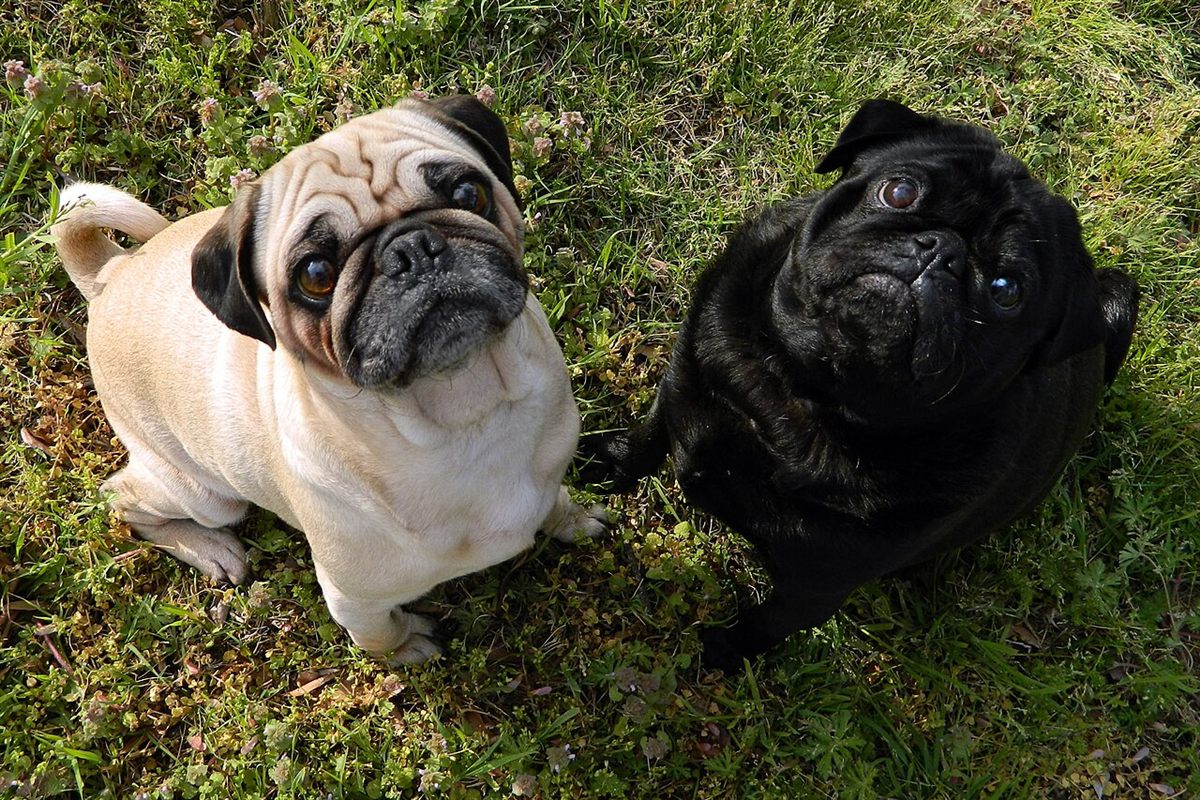
The highest-priority pug health problems are the ones that change oxygen, vision, pain, or heat tolerance: brachycephalic obstructive airway syndrome, eye injury and ulcer risk, skin fold dermatitis, obesity, dental disease, patellar luxation, hip or elbow dysplasia, hemivertebrae, and neurologic disease such as Pug Dog Encephalitis. Not every pug will experience every condition, but the breed concentrates risk in systems that affect day-to-day comfort.
The strongest data point comes from a Royal Veterinary College VetCompass study comparing 4,308 Pugs with 21,835 non-Pugs. RVC reported that Pugs were 1.9 times as likely to have at least one disorder recorded in a single year and had higher risk for 23 of the 40 common disorders studied. The risk profile was especially high for BOAS, narrowed nostrils, eye ulceration, skin fold infections, ear discharge, allergic skin disease, demodectic mange, retained baby teeth, and obesity.
That does not mean a pug owner should panic over normal snuffles or assume every symptom is catastrophic. It does mean the baseline should be stricter than it is for many longer-nosed breeds. Noisy breathing is not just a cute sound. A red eye is not just irritation. Weight gain is not just a cosmetic issue. A recurring fold odor is not just a grooming nuisance. Small clues matter because the breed has less anatomical margin for error.
| Risk Area | Early Owner Clues | First Action | Why It Matters |
|---|---|---|---|
| Airway and BOAS | Snoring, snorting, wheezing, heat intolerance, slow recovery | Veterinary exam and BOAS severity discussion | Breathing effort can escalate with heat, stress, and weight gain |
| Eyes | Squinting, redness, cloudiness, rubbing, discharge | Same-day vet advice for pain or visible change | Corneal ulcers can be painful and vision-threatening |
| Skin folds and ears | Odor, damp folds, redness, head shaking, discharge | Ask for a cleaning and infection-control plan | Moist folds and inflamed ears often recur without routine care |
| Weight, knees, hips, spine | Stair reluctance, skipping gait, fast fatigue, rounded waist | Body condition review and orthopedic exam | Extra weight increases breathing load and joint pain |
How Serious Are Pug Breathing Problems and BOAS?
Pug breathing problems can be serious because the breed is brachycephalic, meaning the skull and muzzle are shortened. BOAS describes the airflow restriction that can result from narrowed nostrils, an elongated soft palate, everted laryngeal saccules, a narrow trachea, and related airway changes. A pug may breathe noisily for years, but a chronic baseline does not make the sound normal or harmless.
Cornell University College of Veterinary Medicine explains BOAS as a condition seen most often in English Bulldogs, Pugs, French Bulldogs, and Boston Terriers. Cornell lists warning signs such as noisy breathing, reduced exercise ability, gagging, labored breathing, open-mouth breathing, bluish gums, and collapse. Conservative care can include healthy weight, minimizing panting, avoiding heat and humidity, controlled activity, stress reduction, and harness use; more severe cases may need specialist surgical evaluation.
The owner problem is that many pug families adapt to symptoms gradually. The dog sleeps louder, walks slower, avoids summer outings, pants earlier, or gags after water, and the change is written off as age or personality. Track changes instead. Record short videos of breathing during sleep, after a calm walk, and during warm weather. Ask your veterinarian what would count as progression for your individual dog.
Breathing signs that should shorten your timeline
- Open-mouth breathing at rest or after very mild activity.
- Blue or gray gum color, collapse, fainting, or sudden weakness.
- Breathing that looks abdominal, labored, or panicked.
- Repeated vomiting, regurgitation, or gagging tied to excitement or meals.
- Heat distress, refusal to continue walking, or recovery that takes longer than usual.
Which Pug Eye Problems Need Same-Day Care?
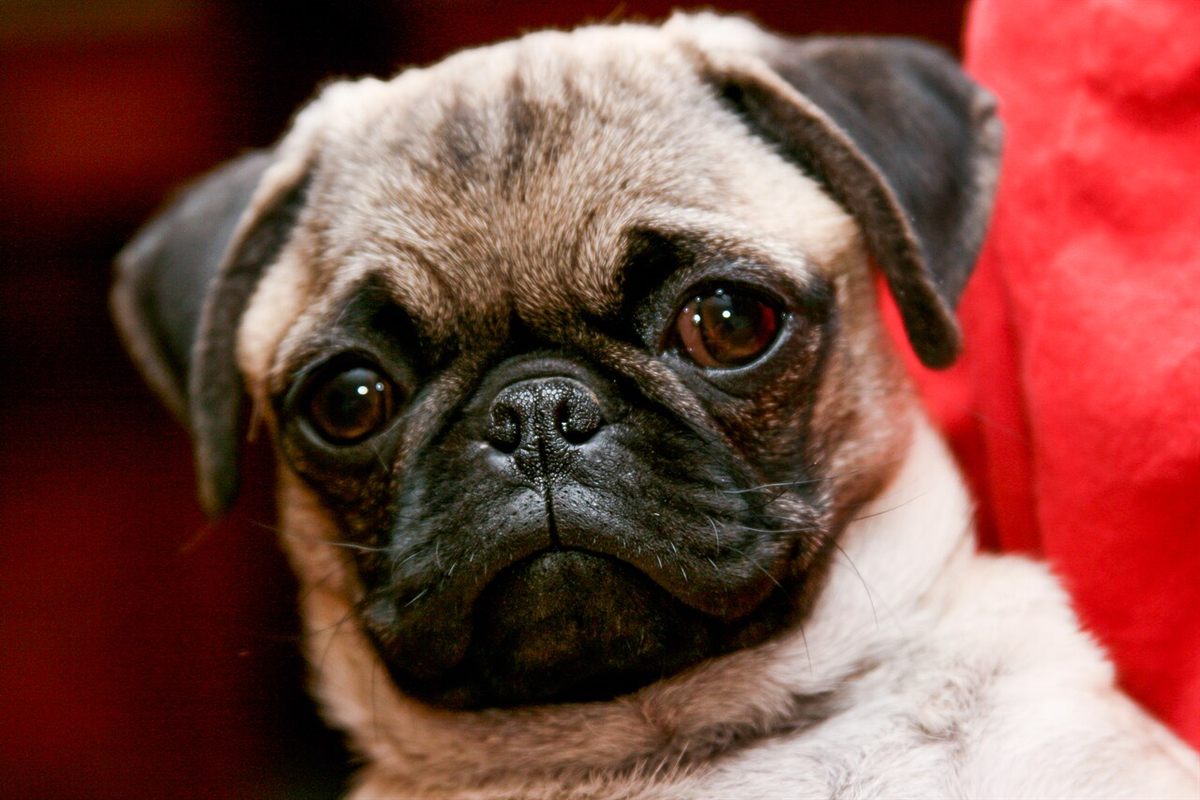
Pug eye problems need fast attention when there is squinting, redness, cloudiness, rubbing, discharge, swelling, visible scratch, color change, or sudden vision trouble. Pugs have prominent eyes and shallow eye sockets, so the cornea can be more exposed to scratches, dryness, and trauma. A painful eye is not a home-remedy project.
Common concerns include corneal ulcers, dry eye, pigmentary keratitis, eyelid problems, and injury from rubbing, play, or household contact. Some eye problems start subtly. A pug may blink more, paw at the face, avoid light, hold one eye partly closed, or seem clumsy in dim rooms. Because the cornea is densely innervated, even a small ulcer can be very painful. Because Pugs are often cheerful despite discomfort, owners may underestimate severity.
Do not use leftover eye drops unless your veterinarian tells you to. Steroid-containing drops can worsen some corneal injuries. If your pug is rubbing the face, use an e-collar or recovery collar while you arrange advice, because self-trauma can rapidly worsen an ulcer. If you need a calmer handling routine for face and coat checks, our dog grooming brush guide can help you build weekly touch points without turning inspection into a wrestling match.
Eye checks that take less than one minute
Look at both eyes in the same light. Compare pupil size, blink rate, redness, discharge, cloudiness, and whether one eye is held smaller. Watch for face rubbing after meals or walks. Keep nails short to reduce injury if your pug scratches. Save a photo of normal eyes so you can compare later changes with something objective.
Why Do Skin Fold Dermatitis and Ear Infections Keep Coming Back?
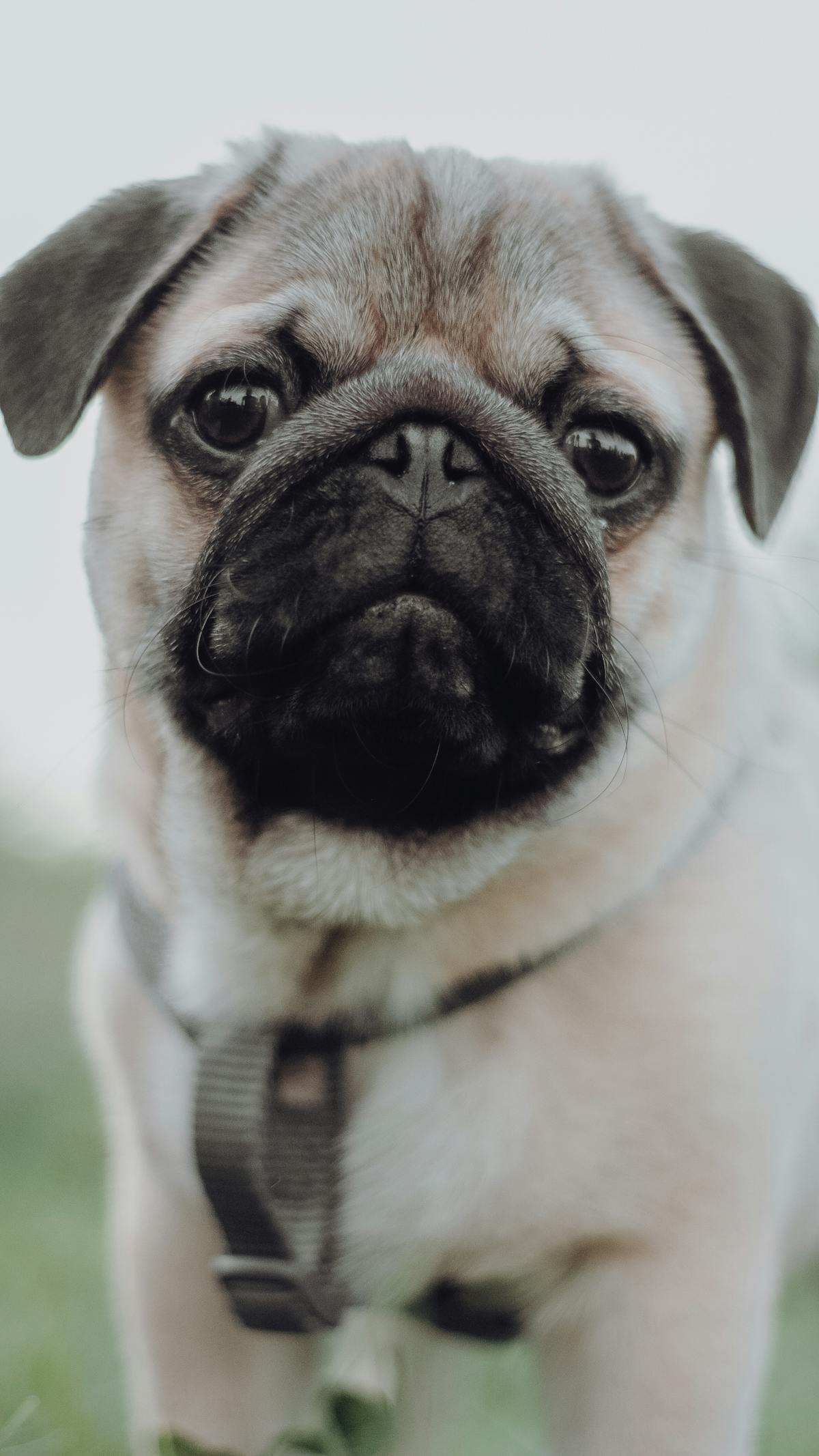
Pug skin fold dermatitis keeps returning when friction, moisture, debris, yeast, bacteria, allergies, and anatomy overlap. Facial folds and tail folds can trap warmth and moisture. If the skin never gets fully dry, irritation can turn into odor, redness, discharge, crusting, or pain. Ear problems can follow a similar cycle when underlying allergy or inflammation keeps the ear canal irritated.
The goal is not aggressive scrubbing. The goal is consistent, gentle cleaning and drying with products your veterinarian approves. Some pugs need simple wipe-and-dry care. Others need medicated wipes, allergy control, ear cytology, topical medication, or a broader skin plan. If your pug flinches when you touch a fold, the problem is no longer cosmetic.
Skin and ear disease also connects to food and weight. Treat-heavy routines can push weight up while also making allergy conversations harder. If your pug has chronic itch, recurrent ear infections, or digestive changes, keep a simple log of food, treats, medications, seasons, flare locations, and response to treatment. A clear log is more useful than switching foods every few weeks without a plan.
| Care Task | What to Check | When to Call the Vet |
|---|---|---|
| Facial folds | Moisture, odor, redness, brown debris, pain | Odor, discharge, bleeding, swelling, or repeated flares |
| Tail fold | Hidden dampness, stool debris, irritation | Pain, foul smell, open skin, or scooting |
| Ears | Head shaking, wax, odor, redness, scratching | Discharge, pain, balance change, or recurring infection |
| Paws and belly | Licking, stains, redness, hair loss | Chronic itch or suspected allergy pattern |
How Do Obesity and Heat Make Pug Health Problems Worse?
Obesity makes pug health problems worse because extra fat increases breathing effort, reduces heat tolerance, stresses knees and hips, worsens stamina, and complicates anesthesia. For a small dog, two or three extra pounds can be medically meaningful. A pug does not need a visible potbelly to be above ideal body condition; the rib check and waist check matter more than the number alone.
Heat is the second amplifier. Dogs cool themselves mainly by panting, and a pug with restricted airflow cannot dump heat as efficiently as a longer-nosed dog. This is why midday summer walks, humid weather, car waiting, hard play, and stress can become dangerous quickly. Shorter, cooler walks are not laziness; they are risk management.
Weight control should be boring and measurable. Use a kitchen scale or measuring cup consistently, count treats as part of the daily total, and weigh your pug at least monthly. If your veterinarian recommends weight loss, aim for steady progress rather than crash dieting. Our best weight management dog food guide covers calorie-aware formulas and portion routines you can use as a starting point for a vet conversation.
A practical pug weight rule
You should be able to feel ribs with light pressure, see or feel a waist behind the ribs, and notice a tuck when viewing the dog from the side. If the harness gets tight, the snoring gets louder, walks get shorter, or jumping declines, review weight before assuming the change is just age.
Are Pugs Prone to Spine, Knee, or Hip Problems?
Pugs can be prone to spine, knee, hip, and elbow problems, including hemivertebrae, patellar luxation, hip dysplasia, elbow dysplasia, and Legg-Calve-Perthes disease. The curled tail and compact body shape can be associated with spinal differences, while small-breed knee instability may look intermittent at first. A pug that skips for a few steps and then seems normal still deserves monitoring.
Movement signs are easy to miss because Pugs are often enthusiastic but not built for high-impact endurance. Watch the first ten steps after waking, stair use, couch jumping, slipping on floors, reluctance to turn, back arching, bunny hopping, toe dragging, and changes in bathroom posture. Record video when you see an odd gait because it may disappear by exam time.
Prevention is not about wrapping the dog in restrictions. It is about reducing avoidable load. Keep the dog lean, use rugs on slick floors, trim nails, choose a harness over a neck collar, avoid repetitive jumping from furniture, and build calm greetings. If your pug launches at guests, our no-jumping training plan can protect joints while improving manners.
| Movement Sign | Possible Concern | Owner Response |
|---|---|---|
| Skipping gait or brief hind-leg lift | Patellar luxation or soft-tissue pain | Record video and schedule an orthopedic exam |
| Back arching or rear-leg weakness | Spine pain, hemivertebrae, disc disease, neurologic issue | Limit activity and seek prompt veterinary advice |
| Slow rising or stair reluctance | Hip, knee, spine, or arthritis pain | Review weight, flooring, nails, and pain scoring |
| Sudden paralysis, dragging, or loss of bladder control | Emergency neurologic problem | Go to urgent veterinary care |
What Is Pug Dog Encephalitis and When Should Owners Worry?
Pug Dog Encephalitis, also called necrotizing meningoencephalitis or PDE/NME, is an inflammatory brain disease associated with the breed. It is not the most common everyday pug problem, but it is serious enough to appear in responsible breeder screening conversations. Owners should know the warning signs: seizures, blindness, circling, abnormal behavior, head pressing, severe disorientation, neck pain, or sudden neurologic decline.
These signs are not a wait-and-see situation. Seizures, sudden blindness, or acute neurologic changes need urgent veterinary care. Many other conditions can cause similar signs, including toxin exposure, low blood sugar, trauma, infection, liver problems, or other brain disease, so diagnosis belongs with a veterinarian. Your role is to describe timing, duration, exposures, medications, diet, recent illness, and any family history if known.
Breeder testing does not guarantee a dog will never have neurologic disease, but it improves the quality of the conversation. A breeder who can explain PDE/NME risk, eye exams, patellas, hips, and family history is operating at a different level than one who only says the puppies are "vet checked." For buyers, the goal is not perfection. The goal is documented risk reduction.
What Pug Health Testing Should Breeders Show?
Pug health testing should include written, verifiable records rather than casual reassurance. The Pug Dog Club of America CHIC recommendations list screening for PDE/NME, hip dysplasia, patellar luxation, and eye examination. The same statement notes second-tier tests such as pyruvate kinase deficiency, bile acids, and elbow dysplasia. A CHIC designation is useful, but owners should still read which tests were completed and what the results were.
Ask for the registered names of both parents, links or copies of OFA/CHIC records, eye exam timing, patella results, hip results, PDE/NME status, elbow or bile acid testing if relevant, and a plain-English explanation of health issues seen in the breeder's lines. Also ask to see the puppy breathe while awake, moving, and resting. Narrow nostrils, constant noise at rest, excessive folds over the nose, or a tightly corkscrewed tail should prompt more questions.
For rescue or rehomed Pugs, you may not have breeder records. In that case, build a baseline file after adoption: weight, resting breathing videos, eye findings, dental status, skin fold condition, ear history, gait notes, medications, insurance details, and any emergency visits. Baseline documentation helps your veterinarian separate a stable quirk from a meaningful change.
| Record or Exam | Why It Matters | Owner Question |
|---|---|---|
| PDE/NME screening | Addresses a serious breed-linked neurologic risk | What are both parents' results and how do you use them in pairing decisions? |
| Eye examination | Helps identify heritable or conformational eye concerns | When was the most recent eye exam completed? |
| Patella evaluation | Small-breed kneecap instability can affect comfort and surgery risk | Were both parents evaluated, and what were the grades? |
| Hip and elbow information | Supports orthopedic risk planning beyond the puppy exam | Can I see the public registry record or report? |
How Much Should Owners Budget for Pug Vet Costs?
Pug vet costs vary by region, age, insurance status, and diagnosis, but the categories are predictable. Budget for routine exams, vaccines, parasite prevention, dental cleanings, skin and ear care, eye visits, weight management, and possible BOAS evaluation. Add an emergency reserve for breathing distress, eye ulcers, heat events, neurologic signs, or sudden mobility problems.
The most expensive pug situations often involve specialty care: airway surgery consultation, ophthalmology, advanced imaging, dental extractions, neurology, or orthopedic procedures. Insurance can help, but timing matters. Once a breathing problem, eye diagnosis, knee issue, neurologic sign, or chronic skin disease is in the record, future coverage may exclude it as pre-existing. That is why comparing policies while a puppy or newly adopted adult still appears healthy is more useful than waiting for the first large invoice.
Do not confuse frugality with delay. A same-day eye exam can be cheaper than managing a deep ulcer. A weight plan can be cheaper than worsening BOAS and knee pain. A fold infection treated early is usually easier than repeated flare cycles. The budget goal is not to predict every bill; it is to fund the predictable screening and avoid preventable emergencies.
| Budget Category | Why Pugs May Need It | Planning Move |
|---|---|---|
| Airway care | BOAS screening, heat-risk counseling, possible surgery referral | Ask early what symptoms would justify referral |
| Eye care | Corneal ulcers, dry eye, irritation, trauma | Keep emergency funds available for same-day visits |
| Skin, ears, and dental | Fold dermatitis, allergy cycles, ear infections, retained teeth | Invest in routine maintenance before chronic pain builds |
| Mobility and neurology | Patellas, hips, spine, PDE/NME warning signs | Use videos and written logs to speed diagnosis |
What Daily Prevention Routine Helps Pugs Stay Comfortable?
The best pug routine is short, consistent, and built around the breed's weak points. Measure meals. Use a harness. Walk during cool parts of the day. Check eyes daily. Dry skin folds. Clean ears only as directed. Brush teeth. Keep nails short. Weigh monthly. Record breathing and movement changes before you forget the pattern.
Start each morning with a quick eye and breathing scan. Are both eyes open equally? Is there new discharge? Is breathing quieter, louder, or more effortful than usual? After meals, watch for gagging, regurgitation, or coughing. After walks, notice recovery time. At night, pay attention to changes in sleep breathing rather than only the fact that snoring exists.
Once a week, do a hands-on review. Feel ribs and waist. Look in facial folds and tail folds. Smell ears. Lift lips to check gums and tartar. Watch the first steps after a nap. Check the harness fit. Update your log if anything changed. These checks take minutes, but they create a trend line that can catch pug health problems earlier than a yearly memory-based exam.
Weekly pug health checklist
- Check eyes for redness, squinting, cloudiness, discharge, or rubbing.
- Review breathing noise, heat tolerance, exercise recovery, and sleep changes.
- Inspect facial folds, tail fold, ears, teeth, nails, and paw licking.
- Log body condition, meal amount, treat count, and monthly weight.
- Watch gait, stairs, jumping, back comfort, and any neurologic changes.
FAQ: Pug Health Problems
What health problems are pugs prone to?
Pug health problems most often involve breathing restriction from BOAS, eye injury risk, skin fold dermatitis, ear disease, obesity, dental disease, patellar luxation, hip or elbow dysplasia, hemivertebrae, and Pug Dog Encephalitis. Owners should prioritize airway, eye, weight, skin, and mobility monitoring because these areas affect comfort quickly.
How can I tell if my pug has breathing problems?
A pug may have breathing problems if snoring, snorting, wheezing, open-mouth breathing, heat intolerance, slow recovery after exercise, fainting, blue gums, or collapse appears. Record breathing videos and ask your veterinarian whether BOAS assessment or surgical consultation is appropriate.
Are pug eye problems emergencies?
Many pug eye problems deserve same-day veterinary advice because prominent eyes are vulnerable to scratches and ulcers. Squinting, cloudiness, redness, discharge, rubbing, or a visible injury should be treated as urgent, especially if the dog is pawing at the face.
How do I keep a pug at a healthy weight?
Keep a pug lean by measuring meals, limiting treats, using short cool-weather walks, and tracking body condition. A healthy weight reduces breathing effort, heat stress, knee load, hip strain, and anesthesia risk.
What health tests should pug breeders do?
Pug breeders should be ready to discuss CHIC-related screening for PDE/NME, hips, patellas, and eyes, plus additional testing relevant to their lines. Ask for registry records or reports, not only verbal reassurance that the parents are healthy.
Bottom Line
Pug health problems are manageable only when owners treat breathing, eyes, skin folds, weight, teeth, and mobility as routine monitoring areas instead of occasional concerns. Build the care plan around lean body condition, cool-weather exercise, fast eye response, documented breeder screening, insurance timing, and a simple weekly health log your veterinarian can use.